

Four free ways to improve your next executive dinner
There are lots of expensive ways to elevate your dinner: opt for the caviar course, order expensive wine, hire a professional florist. Here are four ways to elevate your dinner that don’t cost a dime.
1. Map out the entire Dinner Journey
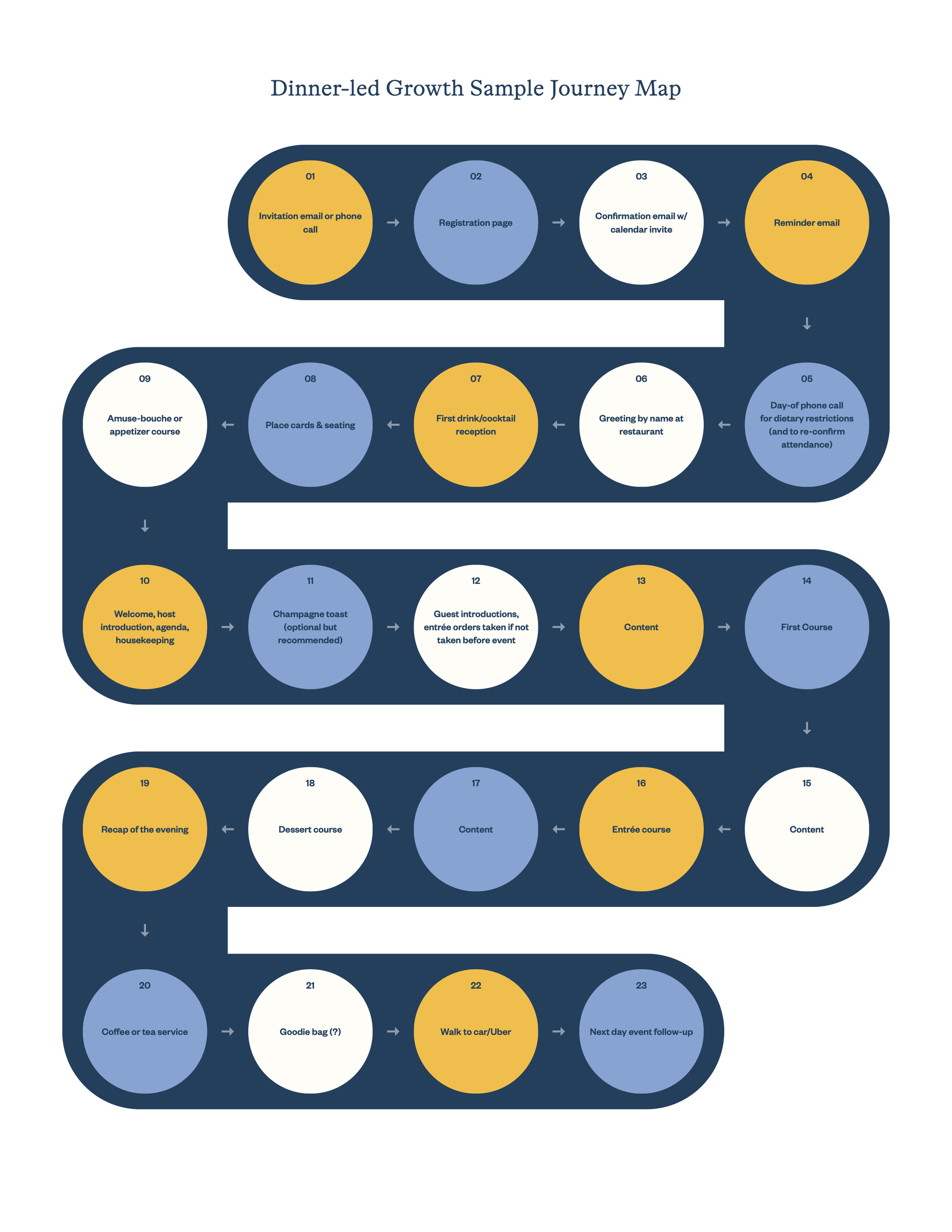
This is a classic "low floor, high ceiling" exercise. It’s easy because Will Guidara of Unreasonable Hospitality fame built a neat, free web app to visually map your event. It’s hard because it forces you to audit every micro-touchpoint. We aren't just talking about the menu; we’re talking about the pre-event invitation cadence, the precise moment they step into the restaurant, the inevitable mid-meal trip to the restroom, and the walk back to their Uber.
Assuming you’ve internalized the table stakes of a great executive dinner I consider non-negotiable, you could also note at which steps you have true interactivity, personalization, and souvenirs.
The three additional free ideas below all spun out of this process. Check-in at the event can often feel cold, like you’re checking in for a doctor’s appointment. Surely there’s a warmer way. Waiting for that first drink to put you at ease can feel like an eternity at a busy restaurant. Guests whispering their entrée choice to a server while the host is talking, or worse, while guests are introducing themselves to the room, is an easily avoidable nuisance.
Feel free to borrow as much from my Dinner Journey Map as makes sense for your event. Instead of re-typing it all into the app, you can download the Markdown file for my Map and upload it straight into the app and edit from there!
2. Memorize the names and faces of your guests
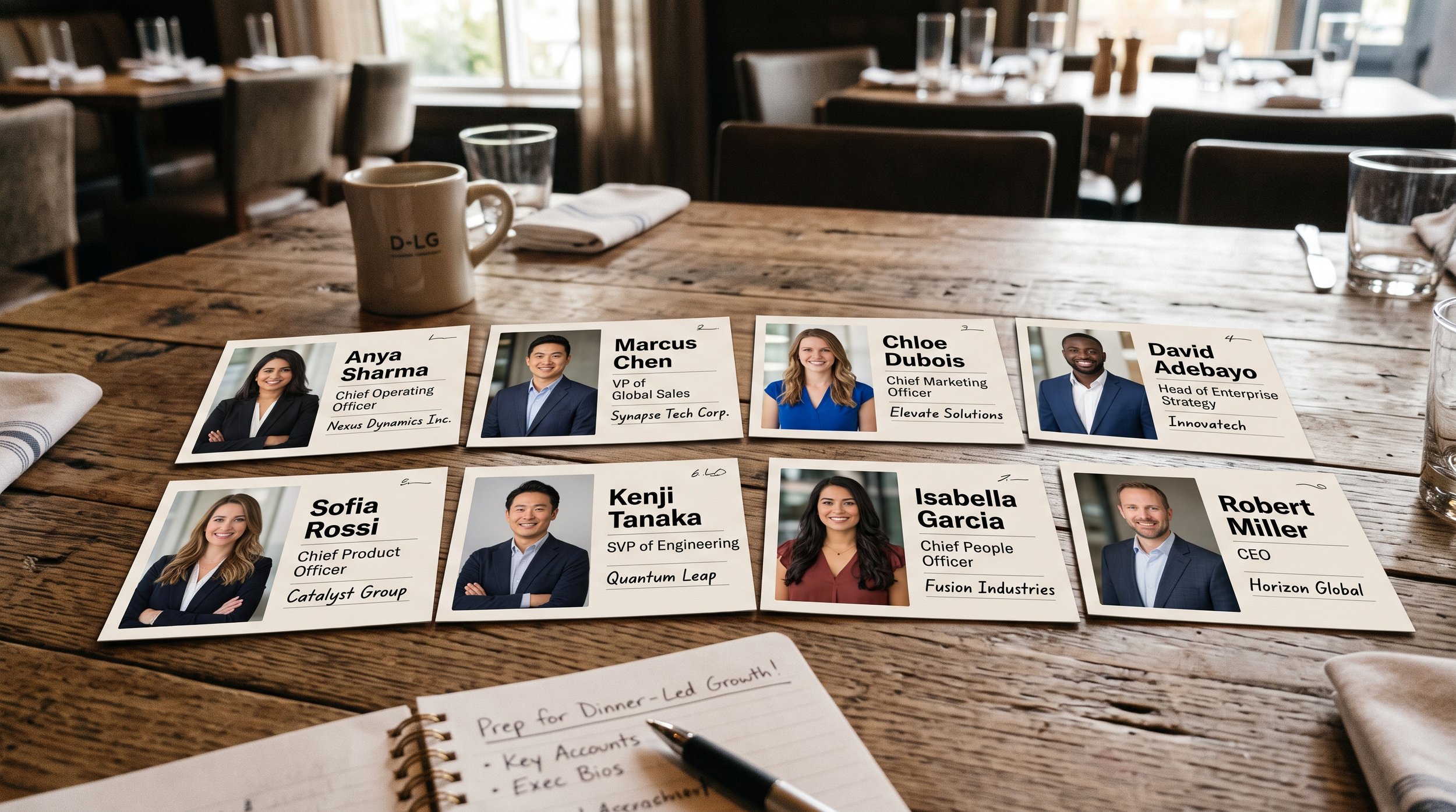
Hospitality doesn't scale, which is exactly why it works. Have at least one host memorize the names and faces of your guest list. When a CMO walks in, greet them by name before they can look around for a check-in desk.
The best way to operationalize this is to have someone—a field marketer, usually—create a Look Book that includes the photos of everyone that’s coming. Typically, salespeople will be asked to include any notes about the person, the account, and the opportunity. Not everyone representing your company needs to know every guest by name, but one person should, and they should try to greet every guest as they arrive. I speak from experience: this makes a HUGE first impression, signaling that this is a professional operation.
Once you see how Eleven Madison Park operationalized this by ditching their reception stand entirely, a laptop-wielding staffer at a private dining room door will start to look less like a premium event and more like a doctor's check-in desk.
3. Have glasses of Champagne ready to serve
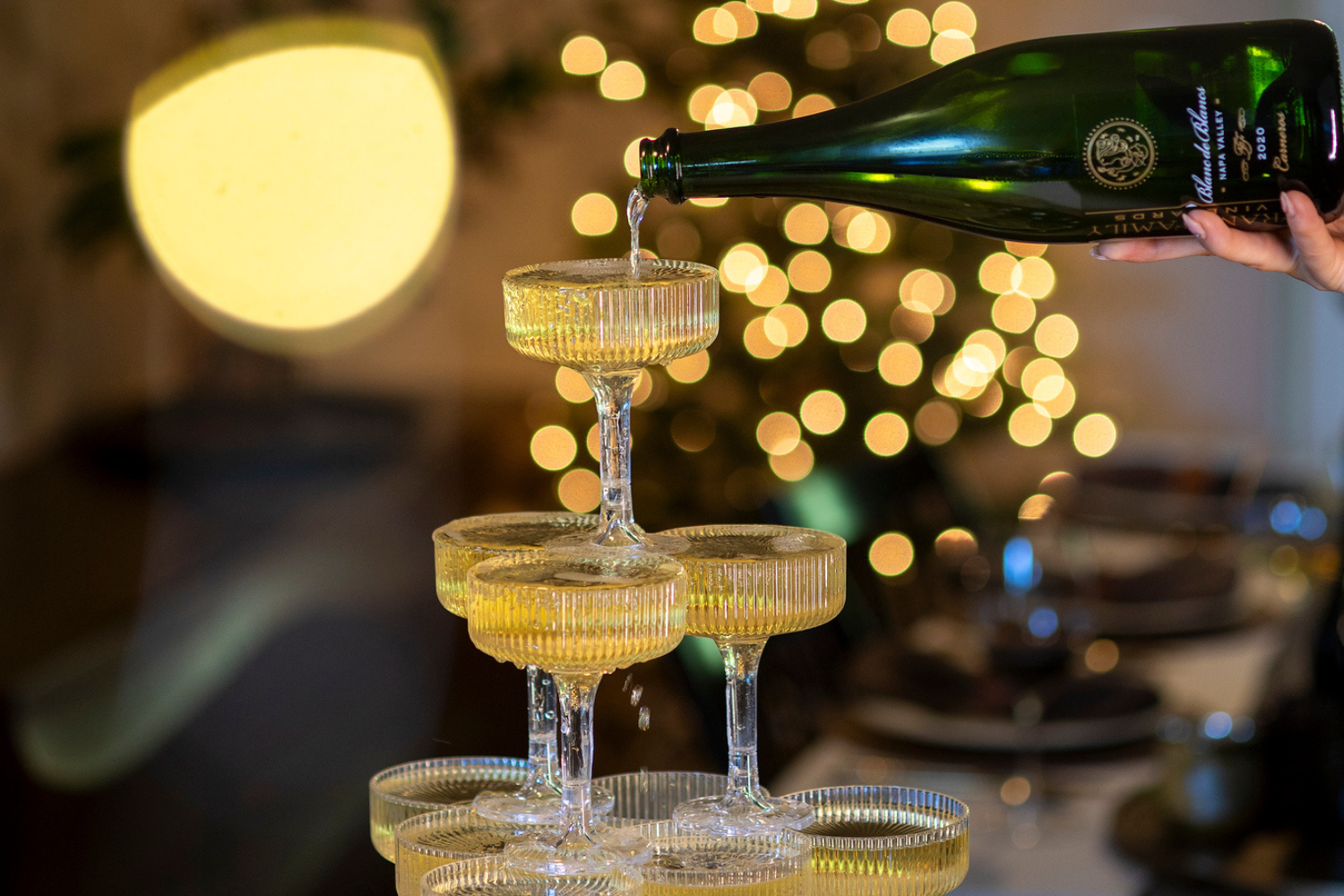
At Wingtip, we had an unofficial North Star metric: Time to First Drink. For a room full of executives who are strangers to one another, reducing friction at the bar is paramount. The traditional pipeline? Guest arrives, waits for a server, orders a drink, server inputs it into the POS, bartender batches it, server delivers it. That’s a 10-minute bottleneck of awkward small talk. The alternative? A crisp glass of bubbles in their hand within 45 seconds.
Technically, this one costs money, but your guests are going to order a first drink when they get there regardless; you’re just substituting that order with something that they can start sipping sooner.
4. The day-of confirmation (with a culinary twist)
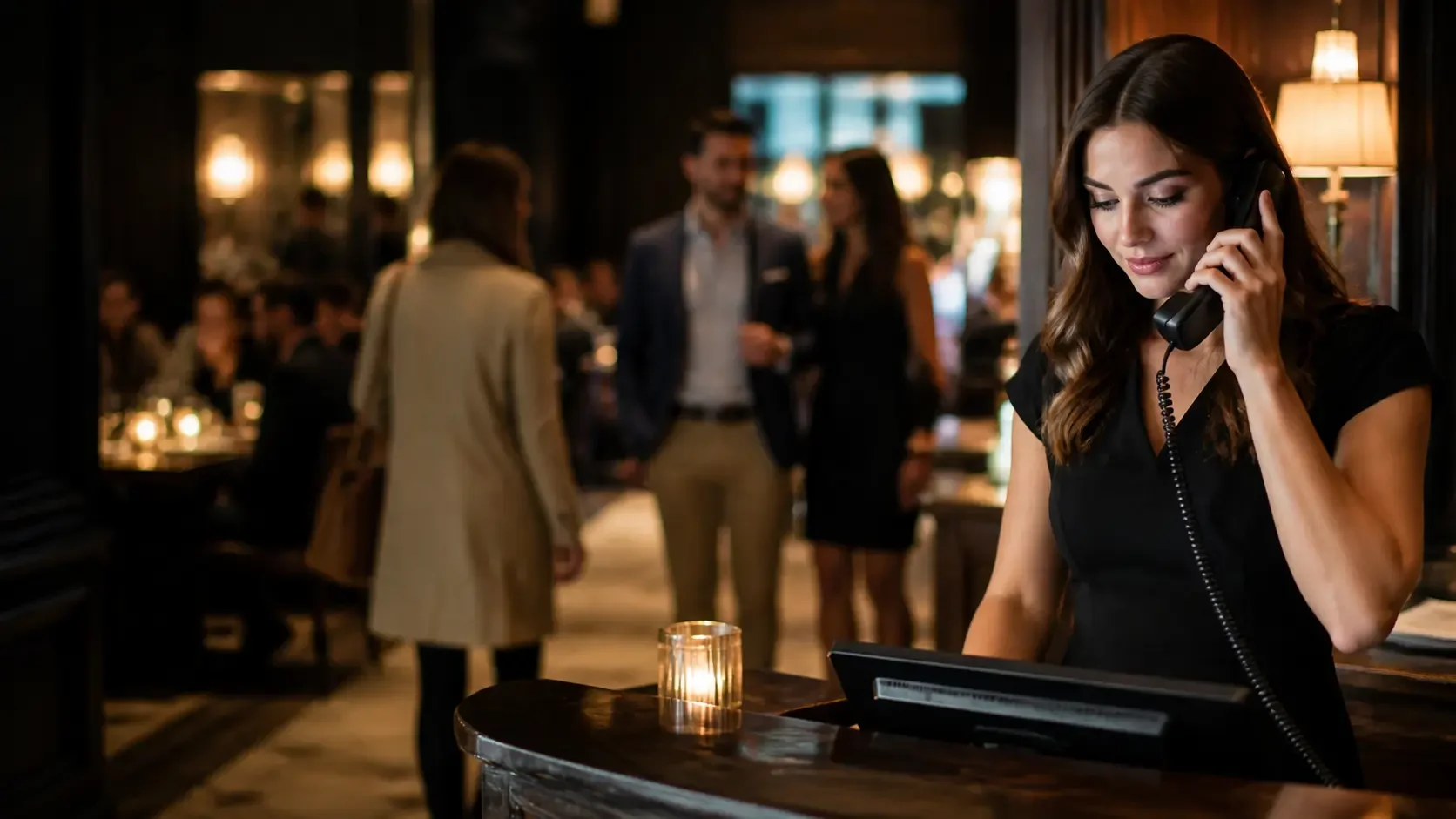
Calling a high-level executive to ask "Are you still coming?" feels like nagging. Calling them to curate their entrée choice? That’s concierge service.
This single call solves your two biggest operational leaks: it decimates your No-Call No-Show rate, and it protects the narrative flow of your evening. There is nothing more disruptive to an executive salon than a server whispering "Salmon or steak?" while your CMO or keynote speaker is setting up a crucial talking point.
Here is a script you can use for the call:
You: Hi, this is Ami from Acme Corp, the host of the dinner at Hot New Restaurant tonight at 6:30. If you don’t mind, I was hoping to find out if you have dietary restrictions the kitchen should know about?
Them: Oh thank you so much for calling, no restrictions.
You: Great, noted. The restaurant is offering entree options of a bone-in ribeye, a roasted chicken, or a pasta. Do you know which you’d prefer? I have information about how they’re prepared if that would help.
Them: Oh, I’ll do the pasta, thanks.
You: Great, we look forward to seeing you tonight. You can come straight to the private dining room when you arrive.
You can imagine other ways this call might go. They might have dietary restrictions, in which case, they’ll be a little thankful they don’t have to share those with the whole room. They might ask questions about the menu which gives you the chance to show how prepared you are with details about how the dishes are prepared. Or they might thank you for calling because they had a change in plans and they won’t be able to attend after all. What might have been a No-Call No-Show is now something you can prepare for, notify someone on the wait list you have room, re-organize the seating chart, tell the restaurant you need one less setting. This is the real reason for calling, but while you’ve got them on the phone, it’s also an opportunity to demonstrate hospitality around allergies or dietary restrictions, and to eliminate the need for the servers to take orders from every guest during the dinner.
The Bottom Line
None of these tactics require a credit card—only intentionality and an obsession with the micro-experience. As Maya Angelou famously noted, people will forget what you said and did, but they’ll never forget how you made them feel.
These are the table stakes you can deploy for free. If you’re ready to architect a bespoke, high-conversion dinner experience that turns empty seats into closed-won pipeline, let’s talk.