Frame 2: Make the digital, tangible
You're never going to hear me bash PowerPoint; I think slides, done properly, serve an extremely useful purpose in presentations. The issue arises when they are a crutch. An executive dinner that consists of the audience watching a slide show deserves shame and ridicule. You can show people slides over Zoom. You have a captive audience in a room, irl ("in real life" as the kids say). CAPITALIZE ON IT!
Take advantage of the physical presence of an audience by making digital concepts physical. Is it "phygital"? As much as that portmanteau makes me cringe, the fact that it's defined as "blending 'physical' and 'digital' to describe the merging of these two worlds to create interactive, immersive, and seamless customer experiences," is enough to make me an evangelist for phygitalism. I'll give you a handful of examples:
6sense's CMO, Latané Conant, wrote a book called No Forms. No Spam. No Cold Calls. All three of those things are made tangible during my dinner for marketing executives:
1. As guests introduce themselves, the last question they have to answer is whether they would like a giant spoonful of Spam. The book is referencing spam email; I'm in a fancy restaurant offering Spam, the mystery meat, straight out of the can. About 10% say yes (trolls and Hawaiians); the other 90% say aloud, "No Spam," reinforcing 1/3 of the book’s title.
2. After explaining how 6sense's scoring of "in-market accounts" tells your salespeople the best time to reach out to prospects, I declare everyone at the dinner a 6sense Qualified Account, and every phone in the room starts ringing simultaneously. Each guest’s BDR or AE had been standing by for the Bat Signal.
3. Near the end of the dinner, I tell the room the most valuable content is still to come, but they know the drill: gotta fill out a form!
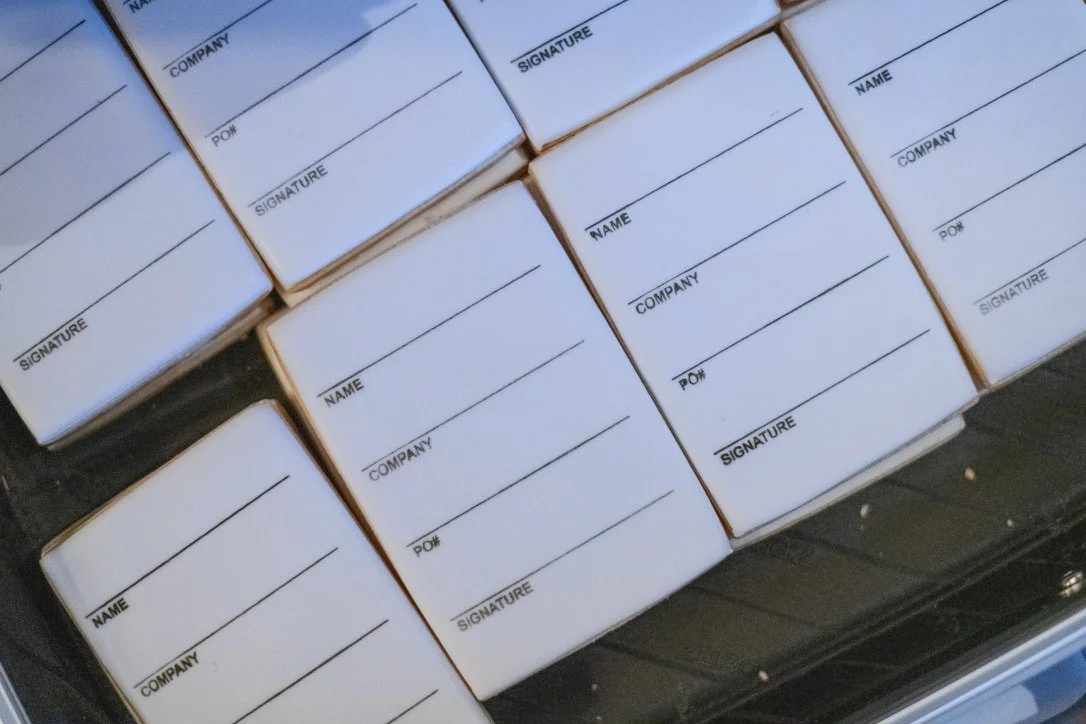
Every marketer knows that the way to get leads is to stick a form in front of the most valuable content. And yet, 6sense’s philosophy is diametrically opposed to that; it’s in the title of the CMO’s book, No Forms. No Spam. No Cold Calls. To drive the point home, tangibly, guests are handed a sugar cookie form and an edible-ink pen to fill out their name, email, and even sign with a PO number if they’re ready to buy on the spot. After all, the CFO prefers “a wet signature.”
Spam? Physical. Forms? Physical. Cold calls? Physical.
It doesn't stop there. 6sense had trademarked the phrase "Dark Funnel" to represent anonymous research prospects do about your company on sites you don’t own. These signals only exist in the digital space until 6sense illuminates them. I wanted to make the Dark Funnel physical.
Every place setting had a menu on it, just as you’d expect at a nice dinner — courses, wines, nothing unusual. Most guests never even read it; it blended in like the flatware. Until it was time.
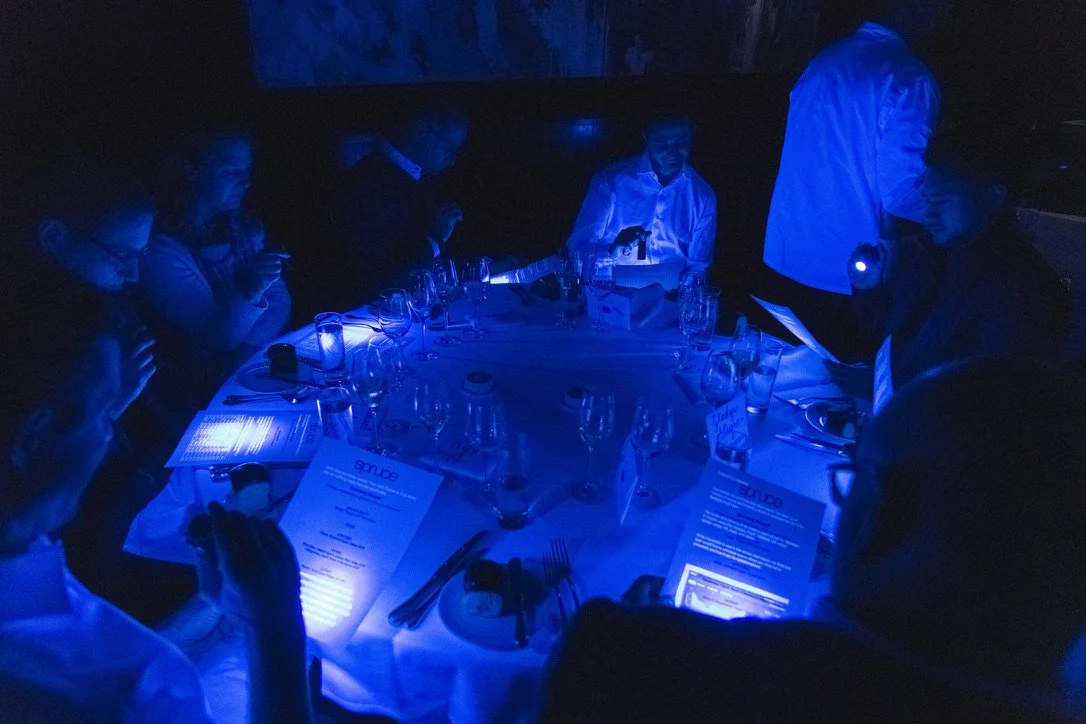
After explaining the Dark Funnel, my field marketer passed out UV flashlights, we dimmed the lights, and the guests aimed their flashlights at their menus. Printed in bank-quality invisible ink was each guest’s Dark Funnel — a screenshot of the actual product report, built for each attendee using keywords they’d want to track, with a personalized message alongside it.
This is an example of that extreme personalization I talked about earlier. Every menu was uniquely useful to each guest. And the natural next step wrote itself: schedule a demo with their account team to see that data in the product live, rather than in invisible ink on paper.
The 6sense dinner for sales leaders was completely different than the 6sensory Supper for marketing leaders. Different content, different jokes, different word play, different props, and different pyrotechnics. The best example in the sales dinner of making the digital, physical, was in an interactive activity about odds.
6sense’s predictive analytics produced a report that showed the various conversion rates for opening opportunities with accounts using 6sense’s scoring. Accounts scored by 6sense as the “hottest” tended to open opportunities at much higher rates than accounts scored as “colder.” Based on the data 6sense ingested, this could be quantified precisely. Walking sellers through the math in the report can be…tedious. To bring it to life, I employed props. Lots of them, because every customer’s report had different conversion rates. I slowly collected an arsenal of “odds” and ends including giant foam dice, a plastic roulette wheel I could travel with, a Bingo ball spinner, a custom digital slot machine, and in the case of impossible odds, I would purchase lottery tickets from a nearby drug store to drive home the hopelessness of calling on the coldest accounts.
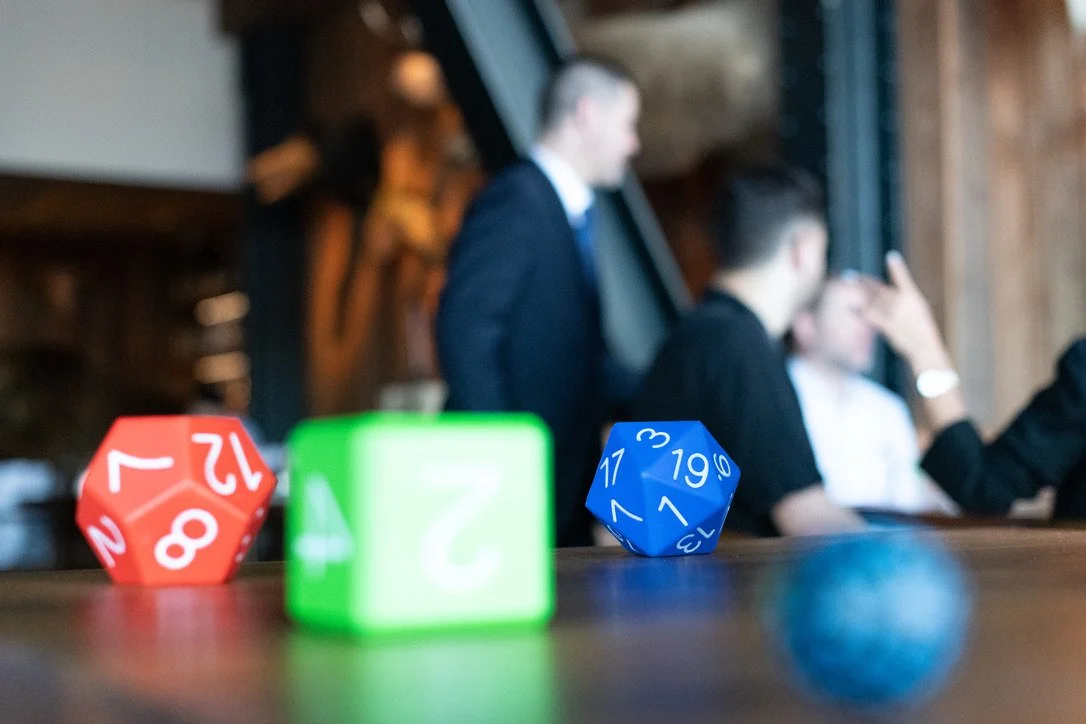
Four volunteers would come to the front of the room to simultaneously roll their dice/spin the roulette wheel/scratch lotto tickets until someone won, usually the person with the best odds! But sometimes, the person with the best odds did not win, and that too was a valuable lesson about probabilities. Importantly, it made the math accessible, fun, and memorable.