My three favorite business books
If you want to win over modern prospects, stop selling features and start designing experiences. Early in my career, three specific books radically shifted how I think about marketing, community, and pipeline generation. They didn’t just change my reading list—they helped me build a multi-million-dollar private social club in San Francisco and, ultimately, shaped the playbook I use at Dinner-led Growth today.
Whether you're a Field Marketer trying to get high-value accounts into a room or a CMO tired of low-converting digital noise, these three books belong on your desk.
The Experience Economy: Competing for Customer, Time, Attention, and Money by Joseph Pine & James Gilmore
Unreasonable Hospitality: The Remarkable Power of Giving People More Than They Expect by Will Guidara
Alchemy: The Dark Art and Curious Science of Creating Magic in Brands, Business, and Life by Rory Sutherland
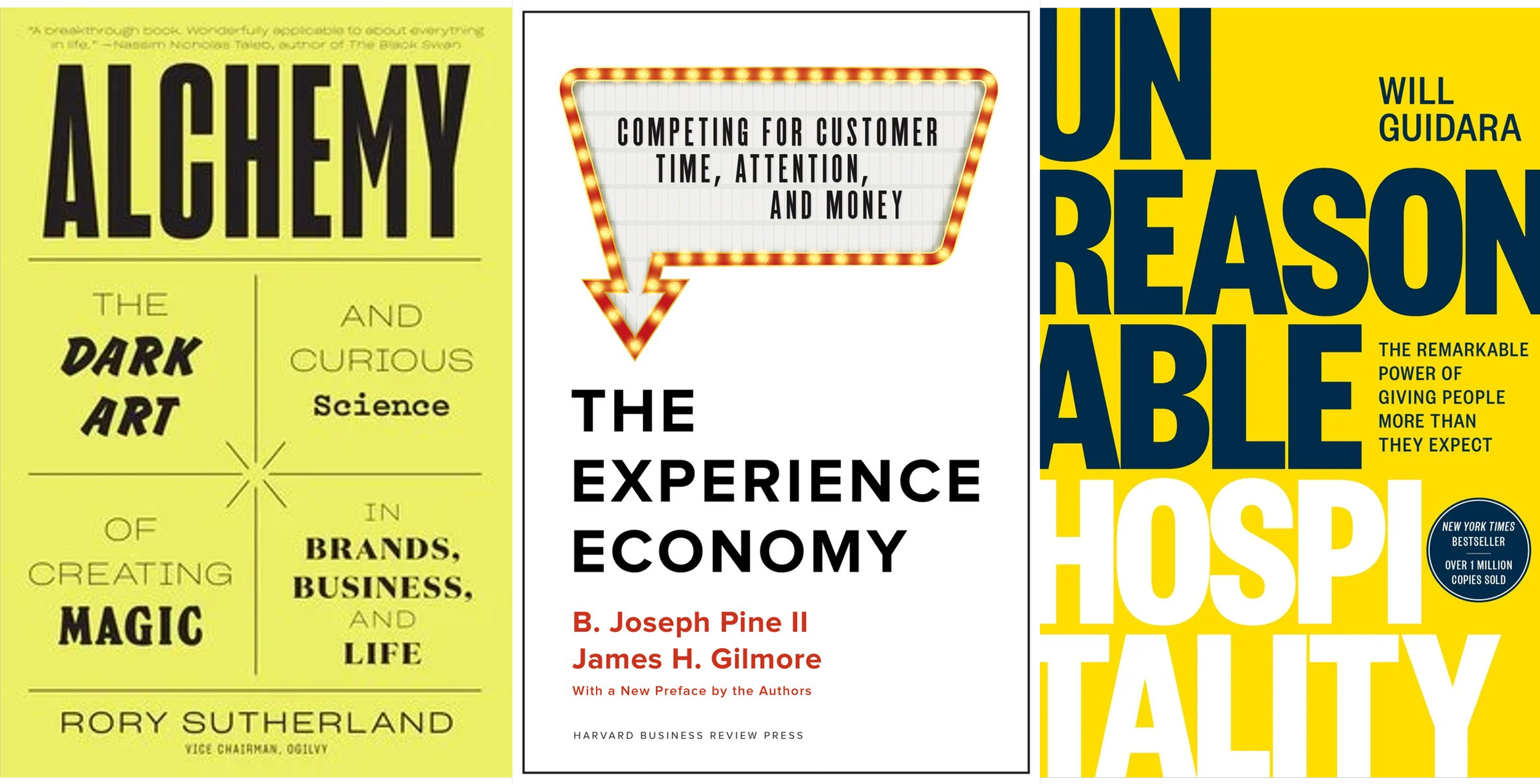
The Experience Economy
I first cracked open The Experience Economy back in 2001 while drafting the business plan for what would become Wingtip—a men’s retail store turned private social club in San Francisco.
The entire book is packed with insights, but Pine and Gilmore drop one lethal provocation every marketer must answer: What would you do differently if you charged admission?
The point isn’t to slap a cover charge on your business. The point is to force yourself to ask: What makes interacting with us so valuable that someone would pay just to walk through the door?
Turns out, when you build a destination instead of a transactional store, people don't just shop—they pay for the privilege to enter. At Wingtip’s peak, over 1,000 dues-paying members agreed.
We turned retail into an experiential playground. On the lower floors, you could buy custom tailored clothing, fine wines, rare spirits, cigars, and fly-fishing gear. On the top two floors, we built a private sanctuary: a full-service bar and restaurant, a temperature-controlled wine cave, private boardrooms, a golf simulator, a cigar lounge, and a roof deck. Anywhere I could transform a standard purchase into a memorable event, I did.
The Quintessential Cross-Sell: Up in the club, we routinely taught members and their guests how to ceremoniously sabre a bottle of Champagne like Napoleon. Naturally, after unleashing their inner emperor, they’d ask where they could buy a saber. Conveniently, we sold them on the ground floor. Unforgettable experience upstairs, point-of-sale downstairs.
A friend introduced me to co-author Joe Pine in 2015, and he visited Wingtip several times. He loved the execution so much he featured Wingtip in a Harvard Business Review article, includes us in his global keynotes, and even cited the club in the preface of the book’s 20th Anniversary Edition. I still consider it my proudest professional achievement.
(Side note: Joe’s latest book, The Transformation Economy: Guiding Customers to Achieve Their Aspirations, is equally essential reading.)
Unreasonable Hospitality
I only wish Will Guidara had published this a decade earlier—I would have made it required reading for every single Wingtip employee on day one.
When I read it in 2023, I had already been hosting executive dinners for marketing leaders for nearly a year. I thought I was delivering great hospitality. Guidara made me realize I was merely being polite; I wasn't being unreasonable. I immediately decided to raise the bar.
One of the first upgrades I made cost exactly zero dollars. Inspired by how Eleven Madison Park scrapped their host stand so staff could memorize guests' faces, I started studying the names and photos of every executive attending my dinners. When guests arrived, I greeted them by name before they could even open their mouths.
Without fail, their eyes lit up. That simple, high-touch surprise immediately set the tone for an evening of truly unreasonable hospitality.
Field Note: Will’s companion workbook, The Unreasonable Hospitality Field Guide, is a must-buy. But fair warning: it’s not a cozy bedside reader. It’s an interactive playbook designed to be highlighted, dog-eared, written in, and put to work.
Alchemy
Long before reading his book, Rory Sutherland’s 2010 TED Talk, “Sweat the Small Stuff,” was my absolute holy grail of marketing content. (I’ve still never met a corporate “Chief Detail Officer,” but I’m convinced every Fortune 500 needs one).
Despite having consumed dozens of hours of Rory on podcasts, Alchemy blew me away. The concept that struck me hardest was Costly Signaling Theory—an evolutionary biology principle with massive implications for modern marketers.
In the book, Rory shares a story from his agency days that brilliantly explains why cold digital outreach fails while high-touch invitations win.
Instead of pitching senior IT executives with cheap, mass-mailed letters, his team created an lavish, intentionally expensive direct mail package complete with a custom box, mousepad, and pen. As his Midwestern account director famously put it:
"I’d like you to produce a standout piece of creative work here, but if you can’t... write them a really nice, one-page letter, and we’ll send it out by FedEx."
Why FedEx? Because nobody throws away a £10 envelope unopened.
That is Costly Signaling Theory in action. The meaning, importance, and urgency we attach to a message is directly proportional to the perceived expense and effort behind its delivery. A mass email or cheap stamp signals "cheap talk." A premium physical invite signals high worth.
In an era where "digital rationalists" push automated sequence after automated sequence into overcrowded inboxes, they are logically right but emotionally dead wrong. Low-cost email completely destroys your signaling power. Bits carry information; costliness carries meaning.
If you watch his TED Talk, you’ll immediately recognize the idea I stole in the photo below.
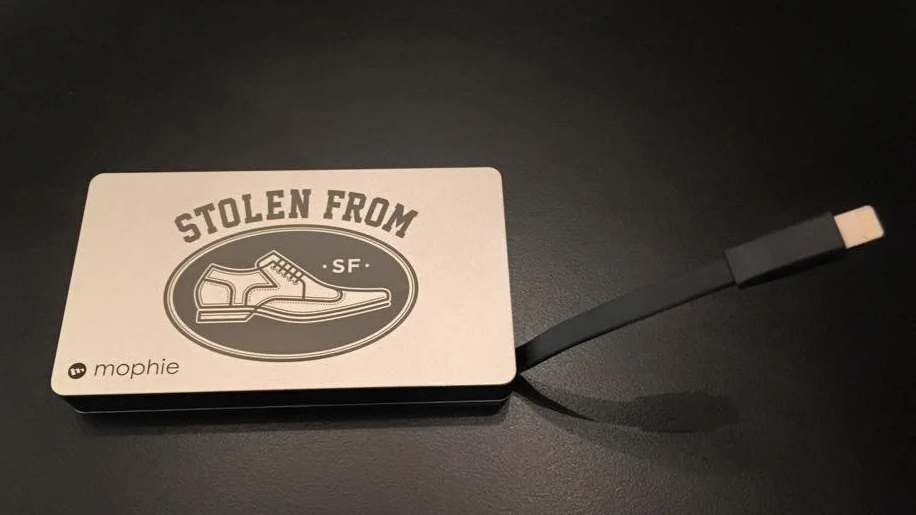
If you made it this far, thank you.
Full disclosure: There is no secret book club, and these aren't affiliate links. (I’ve linked them via Bookshop.org to support independent bookstores.) I share these because these three philosophies completely reshaped my career—and because nothing brings me more joy than watching other leaders apply them and win.
If you’re ready to stop sending cold emails into the void and start using costly signaling and unreasonable hospitality to convert your top-tier accounts, let’s talk. At Dinner-led Growth, turning high-value prospects into lifelong clients over exceptional experiences is quite literally what I live for.