Why I start with Champagne
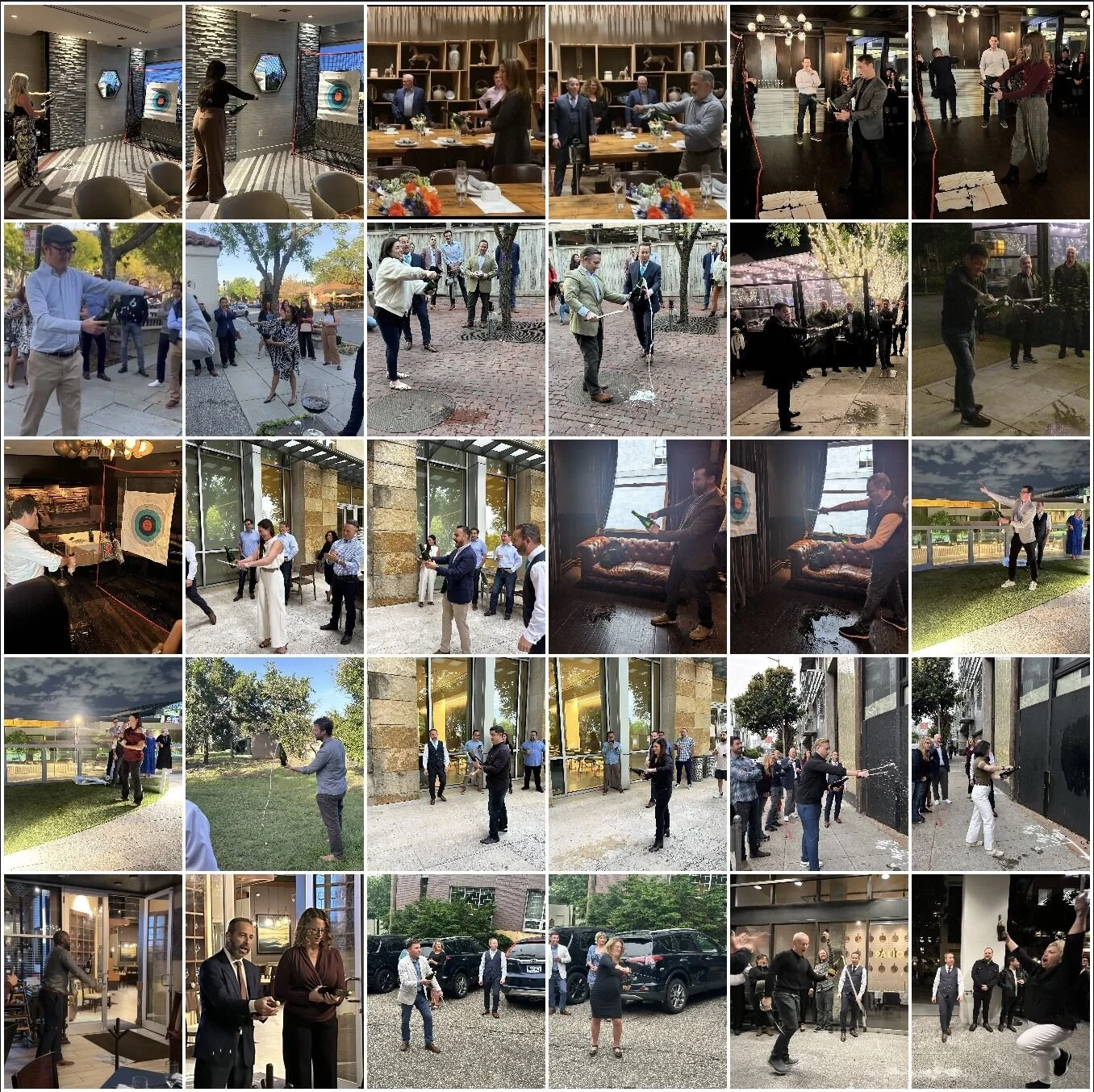
You might think I start my executive dinners with Champagne sabrage to show off. The twist? I don’t saber the bottle—my guests do. Beyond the theatrical spark, kicking off an evening with a popping cork isn't just entertainment; it’s intentional strategy. Here’s why sabrage sets the ultimate stage for dinner-led growth:
I believe a great meal at a high-end restaurant should begin with Champagne.
It’s a nice way to get the entire room celebrating together.
Sabering is a cool party trick that is easier to do than most people think.
Champagne is an apéritif
There is a scientific reason Champagne is often poured as the first drink at a fancy dinner. A dry, crisp Champagne (like a Brut) acts as a beautiful apéritif. The refreshing acidity and effervescence wake up your palate and stimulate your appetite. It also cleanses the mouth of any lingering flavors from the day, priming you to fully taste and appreciate the complex dishes that will follow. If you thought I saber for valor, it’s actually for science.
Pop, Toast, Connect
Two things can be true at the same time:
Giving executive guests food and beverage freedom of choice is crucial, and
It is good when, occasionally, the entire room is eating or drinking the same thing.
From Caesar salads vs. soup to cabernet vs. martinis, most of an executive dinner is a choose-your-own-adventure affair. That freedom is great—but shared moments are what build real connection.
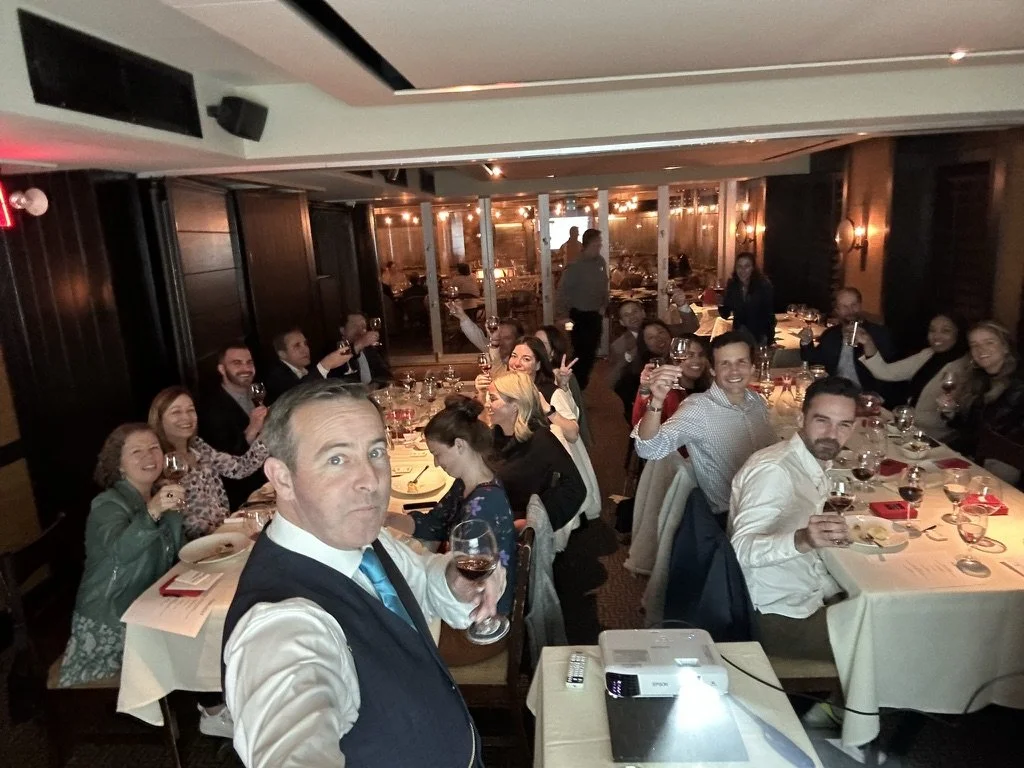
At the same time, I think it’s great if one or two times during the dinner, everyone is enjoying the same thing at the same time, especially when marking the moment with a toast. When everyone is simultaneously raising their glass, saying something aloud together, and then clinking glasses with neighbors, you’ve set the tone for the evening that this will be fun and fancy at the same time.
Kills two birds with one saber
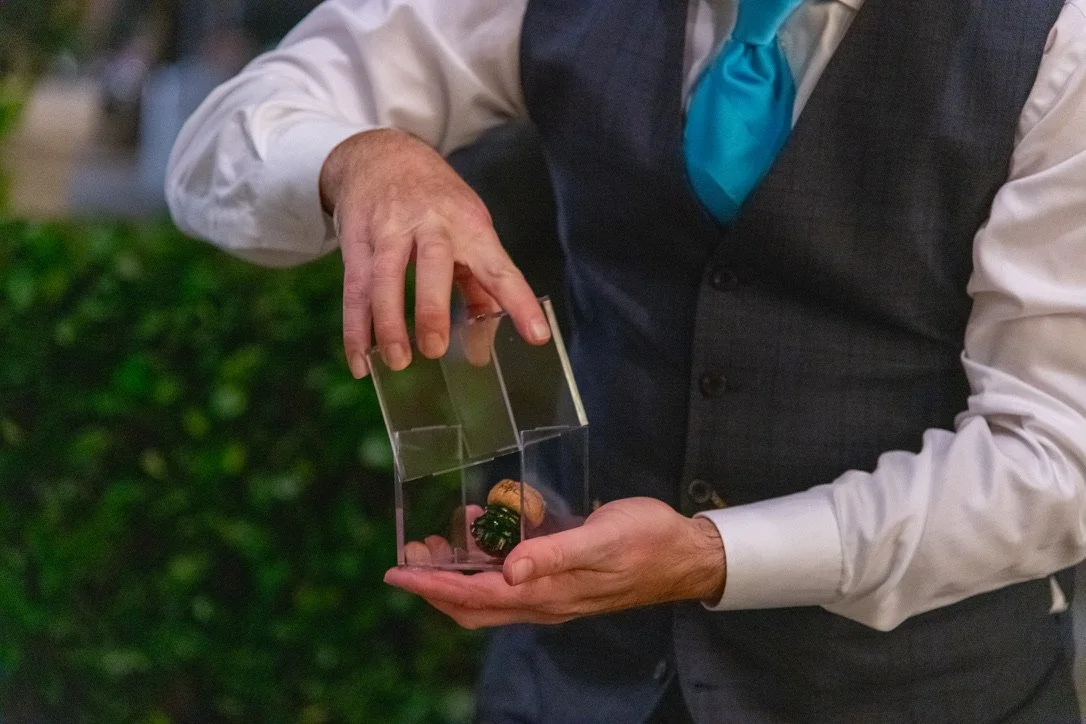
In my Table Stakes article, I talk about several principles I incorporate into every dinner, like interactivity, personalization, and the importance of souvenirs among other things. Teaching guests to saber addresses two of them in one party trick: interactivity and souvenirs. Two to three guests will stand in front of a bunch of strangers and bravely do the sabering, hardly a passive activity. Those same guests will get their cork-and-glass-keepsake gifted in a display case they can take home and display on the mantel or their desk. If you want to learn how to saber, I’ve broken it all down (with a surprise cameo) here.
The Field Marketer’s Takeaway
Sabering isn't just theatrical flair; it's grounded in sensory science, community building, and high-impact interactivity that leaves guests with an unforgettable desk trophy. Want to orchestrate executive experiences that drive real pipeline? Let's pop a cork and talk strategy.